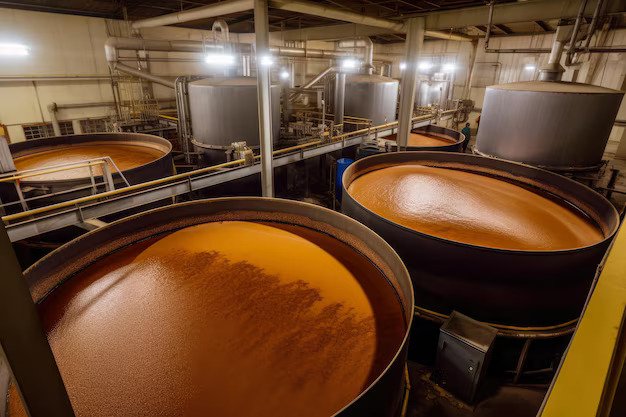
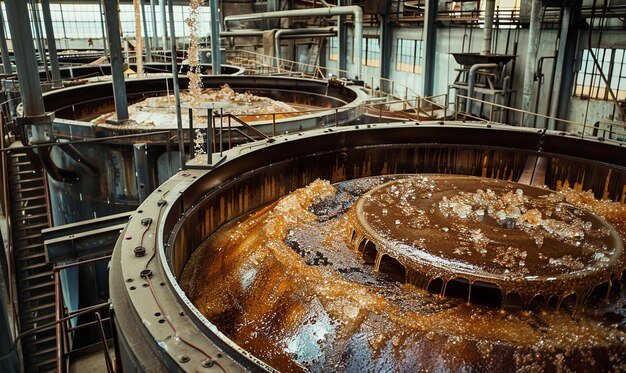
Where enzyme science transforms industrial sugarcane molasses processing
Molasses and sugarcane juice are sugar-based feedstocks, not starch-based ones — the conversion challenge is fundamentally different from grain distilling. Molasses contains not just directly fermentable sugars but also non-fermentable sucrose-derived compounds, residual starch, dextrins, and dextran formed during cane processing and storage, all of which represent fermentable value left on the table if not properly addressed.
Our proprietary enzyme blends unlock this residual value — converting non-fermentable sugars into forms yeast can use, relieving the buildup that interferes with processing and fermentation, and supporting the fermentation itself with the right nutrient and viscosity conditions. Fermaxis's Bacillus-based proprietary blends are engineered to deliver exactly that, with a separate formulation for molasses and cane-juice feedstocks.
How Fermaxis reaches the molasses alcohol industry
Fermaxis supplies proprietary enzyme blends directly to molasses-based and cane-juice-based distilleries — working with process engineers to integrate the right blend for the specific sugar feedstock and fermentation system in use. We also supply to traders and distributors who on-supply to distilleries, in some cases with dilutions suited to specific feedstock or regional requirements. Every blend is produced under the same in-house fermentation standard and carries verified activity per batch.
Most suppliers treat molasses and grain distilling as the same problem. Fermaxis operates differently: sugar-based feedstocks call for an entirely separate approach from starch-based ones — one proprietary blend to convert non-fermentable sucrose into fermentable sugar, another to relieve the buildup that develops during cane processing and storage, and a distinct low-dose fermentation-support formulation suited to sugar fermentation rather than starch fermentation. Feedstock-appropriate formulation is not a marketing claim. It is what separates efficient molasses distilling from wasted fermentable sugar.
What our proprietary blends do at each production stage
Sucrose conversion
Our blend converts non-fermentable sucrose into fermentable sugar, unlocking sugar that would otherwise pass through fermentation unused.
Process-flow relief
A dedicated formulation breaks down the buildup formed during cane processing and storage, reducing the viscosity and processing difficulties it causes.
Molasses preservation
Targeted proprietary blends help preserve valuable fermentable sugars in stored molasses ahead of processing.
Fermentation support
A low-dose formulation suited specifically to sugar-based fermentation systems maintains steady yeast performance through the fermentation cycle.
Residual starch & dextrin handling
Where cane juice carries residual starch or dextrins, a supporting blend converts these into additional fermentable sugar.
Higher alcohol yield
Fuller conversion of available sugars translates directly into more alcohol recovered from the same tonnage of molasses or cane juice.
Supporting every stage of molasses alcohol production
From molasses storage and preservation, through dilution and pre-fermentation treatment, to fermentation itself — Fermaxis's molasses alcohol enzyme portfolio is calibrated to each stage where fermentable sugar is protected, unlocked, or converted.
Industrial Processing In Practice